TL;DR: if you relied on Vibe Kanban to launch and isolate agents, look at a local orchestrator — Kelvia is not that and will disappoint you. If you relied on it to hold the work while some agent did it, that half is replaceable, and it is the half that survives your next orchestrator switch.
Vibe Kanban shut down in April 2026. The repository is still public, the package still installs, and the README still opens with the announcement. What stopped is maintenance: no new commits since late April, and open issues sitting untriaged. That is a slow kind of dead — it works until the day it doesn't.
What is the best Vibe Kanban alternative?
There isn't one, and anybody who gives you a single name is selling something. Vibe Kanban did two jobs, and the market split cleanly along that seam after it closed. Pick your replacement by the job you actually lost, not by the name you're used to typing.
The two halves, named plainly
The runner. Give an agent a branch, a worktree, a terminal and a dev server; run several in parallel without them stepping on each other; review the diff; open the PR. This is the half people mean when they say a coding agent orchestrator.
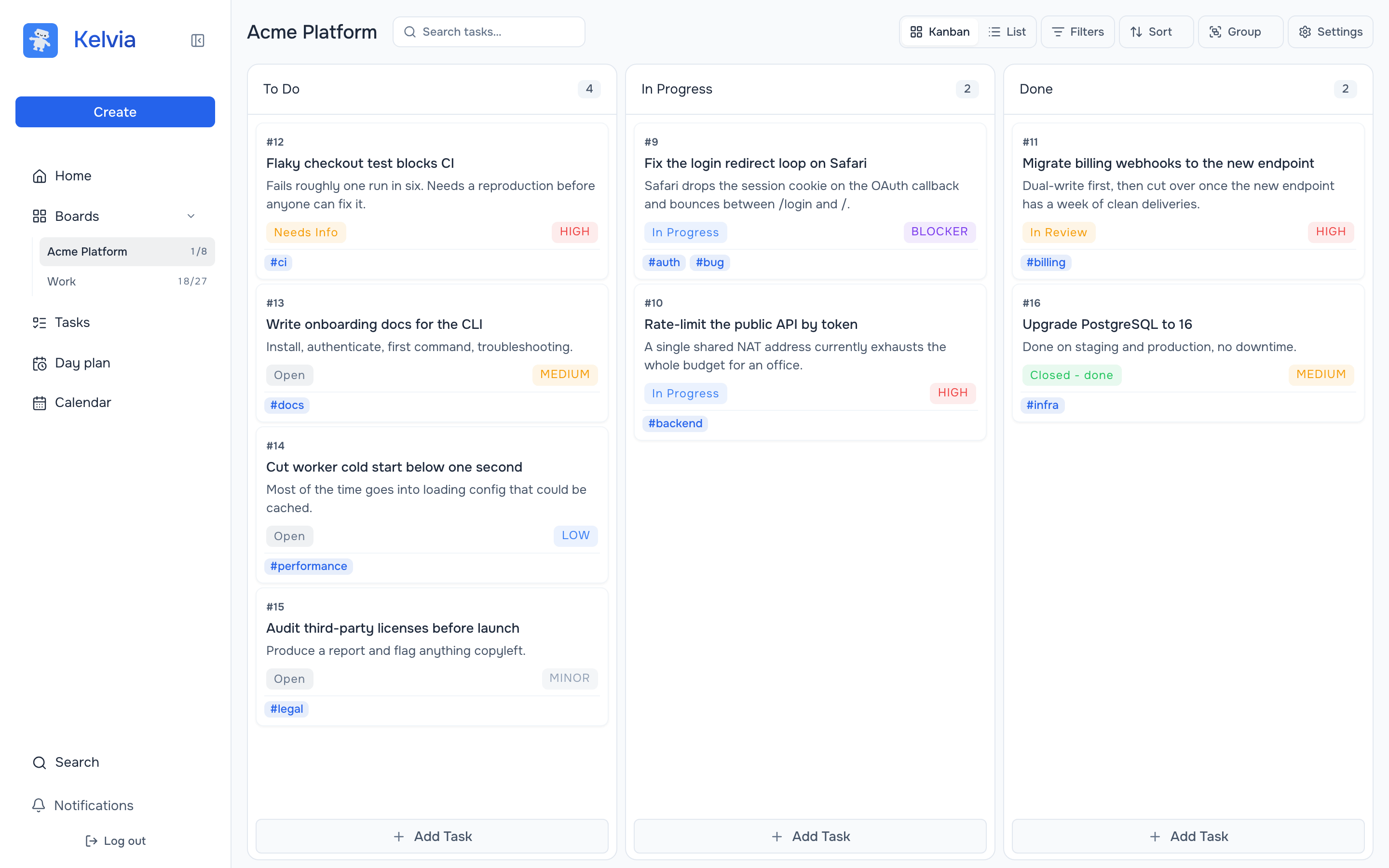
The board. Columns, tasks, comments, who is doing what, what's blocked, where you left off on Friday. This is the half that answers "what was I trying to achieve?" after a week away.
Bundling them made sense when nothing else did either job well. It stopped making sense when the labs shipped good orchestrators and updated them weekly. Louis, who ran the project, said as much in the community thread: catching up on orchestration against extremely well-staffed labs is not an exciting roadmap, and the more interesting question is how a board works alongside those orchestrators rather than replacing them.
If you lost the runner
Then you want something local that spawns worktrees and manages parallel agent sessions. Several projects grew into that space after the shutdown, and they share a shape worth knowing: local-first, SQLite on disk, one command, no account. If the words "must be local" describe you, that's the shelf to shop on, and this page ends here for you.
Worth knowing before you migrate: the Vibe Kanban source is MIT-licensed and still on GitHub, and several people are maintaining private patch branches. If your needs are small and specific, pinning the last version that behaved and carrying two patches is a legitimate answer that nobody will put in a comparison table.
If you lost the board
This is the half Kelvia does. Not a fork, not a community edition — a different product that happens to cover the same job.
The practical difference is that a board reached over MCP doesn't care which runner is on the other end. Claude Code, Codex and Cursor all speak MCP; so does whatever replaces them next year. Your planning layer stops being a hostage to your execution layer, which is precisely the coupling that made this shutdown hurt.
- Boards, columns, tasks, comments, tags, stages and worklogs — the agent reads and writes the same board you look at.
- 58 MCP tools with read-only and destructive annotations, so a client can auto-approve reads and keep writes visible.
- Agent keys with their own board role, scopes and expiry, so the agent's comments are attributed to the agent and not to you.
- Board members with roles — someone who is not a developer can watch progress without touching a terminal.
- Free. No paid tier, no card, no seat count.
Where Kelvia is the wrong answer
Stated up front, because you'll find out in ten minutes anyway:
- It does not run agents. No worktrees, no parallel workspaces, no terminal, no dev server, no diff review. If that was your use case, close this tab.
- It is not local. Kelvia is hosted, and using it means creating an account. If you left Vibe Kanban specifically because of the cloud direction, this will annoy you for the same reason.
- It is not self-hostable. The MCP server is open source under MIT; the board behind it is not.
- It is not a Linear replacement for a real org. No sprints, no complex workflow automation, no enterprise anything.
Connecting a board over MCP
Two commands, then a browser login:
claude mcp add --transport http --scope user kelvia https://mcp.kelvia.app/mcp
claude mcp list
Run /mcp in Claude Code, pick kelvia, finish OAuth in the browser. Then verify with a read before you let anything write:
List my Kelvia boards. Do not change anything.Setup for Codex and Cursor is on the MCP documentation page, and the server itself is open source on GitHub if you'd rather read the tool definitions than trust a page written by the person who wants you to sign up.
FAQ
Is Vibe Kanban still usable?
Yes, with the caveat that it is unmaintained. The package installs and the repository is public. There have been no new commits since late April 2026 and open issues are not being triaged.
Is Kelvia a Vibe Kanban replacement?
For the board half only. It does not launch agents, create worktrees or execute tasks.
Can I keep my orchestrator and change only the board?
Yes, and that is the recommended shape. A board connected over MCP is independent of the runner, so switching orchestrators later does not cost you your task history.
Does Kelvia run locally?
No. It is hosted and requires an account. The MCP server is MIT-licensed and open source; the board is not self-hosted.
What happened to Vibe Kanban?
The company behind it announced a shutdown in April 2026 and opened a community discussion about whether the project could continue as a community-maintained edition.
One board for people and agents
Need the board half back?
Connect over MCP, run one read-only request, and let the first write be a task you can watch appear.
Try for free